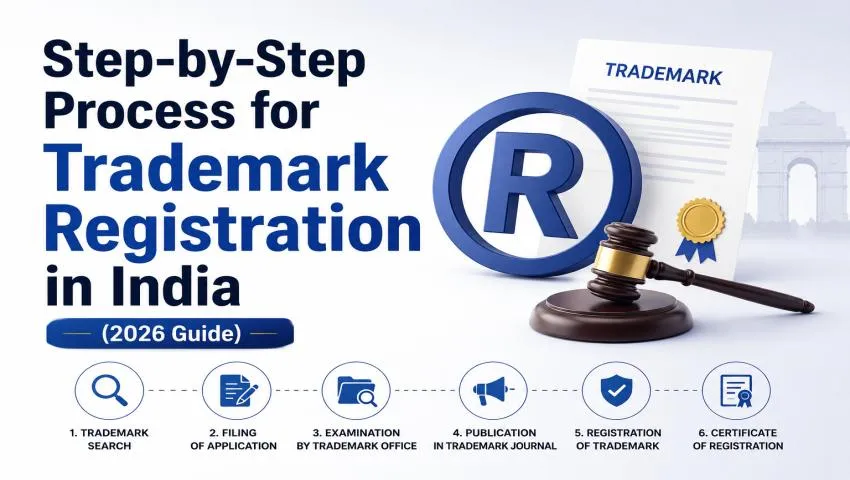
Trademark Registration in India 2026 explained with latest IP India updates, renewal rules, fees, process and compliance tips. Register your brand with CertifyKaro.
Introduction
Trademark Registration is becoming increasingly important for businesses that want to protect their brand name, logo, slogan, product identity, or service identity in India. In 2026, businesses are paying greater attention to trademark protection as online brands, e-commerce businesses, startups, and digital services continue to expand.
The latest official updates from the Intellectual Property India portal show that the Trade Marks Rules and related resources remain actively maintained, while the Trade Marks Registry continues to operate its electronic filing and processing system. IP India also provides online facilities for trademark searches, application filing, status tracking, hearings, and other proceedings.
For a business owner, the key issue is not simply filing a trademark application. The real objective is to select the correct class, avoid conflicts, respond properly to objections, and renew the registration on time.
This guide explains the latest 2026 trademark registration and renewal process, important rules, documents, fees, practical compliance steps, and common mistakes in simple English.
What Are the Latest Trademark Updates in India in 2026?
The Indian trademark system continues to move toward digital processing and online management of applications. The official IP India portal provides electronic filing services, trademark search facilities, application tracking, hearing information, and access to the Trade Marks Journal.
The current official rules page lists the Trade Marks Rules, 2017 and related amendment material, with the page updated on July 24, 2026. This makes it important for applicants and existing trademark owners to rely on the latest official forms, fees and procedural information instead of older online guides.
Important 2026 compliance points
- Trademark applications should be filed under the correct goods or services class.
- Applicants should conduct a proper trademark search before filing.
- Application status should be monitored regularly.
- Examination objections should be answered within the applicable deadline.
- Owners should monitor the Trade Marks Journal for opposition.
- Registered trademarks should be renewed before expiry.
- Current government fees and forms should be checked before filing.
Trademark protection covers specific goods or services. India follows the Nice Classification system, with Classes 1–34 generally covering goods and Classes 35–45 covering services. Choosing the wrong class can reduce the practical value of your protection.
For startups and growing businesses, trademark registration is therefore not just a legal formality. It can become an important business asset that supports brand recognition, licensing, franchising, investment discussions and long-term expansion.
Why Should a Business Register a Trademark in 2026?
One of the most common questions business owners ask is:
“Is trademark registration necessary for my business?”
There is no universal requirement for every business to register a trademark. However, registration provides stronger statutory protection for a brand and gives the registered proprietor important legal rights under Indian trademark law.
A trademark can cover a business name, logo, symbol, label, word, or other eligible mark. IP India states that individuals, startups, SMEs, companies, partnership firms, trusts, societies and foreign applicants can apply for trademark registration.
Major benefits of trademark registration
- Brand protection: Helps protect your registered mark against unauthorized use.
- Business credibility: A registered brand can create greater confidence among customers and business partners.
- Legal rights: Registration provides statutory rights in relation to the registered mark.
- Business asset: A trademark can have commercial value and may support licensing or franchising.
- Expansion support: A protected brand can be easier to scale across products and locations.
- Deterrence: Registration can discourage competitors from adopting confusingly similar branding.
Another important point is that trademark protection is linked to the goods or services for which the mark is registered. Therefore, simply registering a business name without considering the correct classes may not provide the level of protection the business owner expects.
Before filing, entrepreneurs should also check whether the proposed mark is already registered or pending for similar goods or services.
How to Register a Trademark in India in 2026?
The trademark registration process can be completed through the Trade Marks Registry's online system. However, proper preparation before filing can significantly reduce avoidable problems.
Step 1: Select Your Brand
Decide exactly what you want to protect:
- Brand name
- Logo
- Slogan
- Product name
- Service name
- Combination of name and logo
The proposed mark should be distinctive and should not unnecessarily resemble an existing mark.
Step 2: Conduct a Trademark Search
Search the existing trademark database before filing.
The search should consider:
- Identical marks
- Similar-looking marks
- Similar-sounding names
- Relevant trademark classes
- Existing applications
- Registered marks
A search does not guarantee registration, but it can help identify potential conflicts before money and time are spent on an application.
Step 3: Choose the Correct Trademark Class
India uses 45 trademark classes.
Classes 1–34 relate primarily to goods, while Classes 35–45 relate to services.
For example, a clothing brand and a digital marketing agency generally operate in different trademark classes. If a business sells several different categories of products or services, it may need protection across multiple classes.
Step 4: Prepare Documents
Common information and documents may include:
- Applicant's PAN
- Applicant identity/address details
- Business incorporation documents, where applicable
- Trademark name or logo
- Details of goods/services
- User claim information, where applicable
- Power of Attorney/authorization, where filing through a professional
If the applicant claims prior use of the mark, supporting evidence may also be required. IP India specifically notes that a prior-use claim requires an affidavit and supporting documents.
Step 5: File the Application
The application is filed in the prescribed form with the applicable government fee.
After filing, the applicant receives an application number that can be used for tracking the application.
Step 6: Examination
The Trade Marks Registry examines the application.
An examination report may raise objections. If this happens, the applicant must review the objections carefully and submit an appropriate response within the prescribed period.
Simply ignoring an objection can put the application at risk.
Step 7: Publication and Opposition
If the application progresses toward acceptance, it can be published in the Trade Marks Journal.
Third parties may oppose the application within the applicable statutory period.
Step 8: Registration
If the application successfully clears the applicable stages and no opposition prevents registration, the trademark is registered and the proprietor receives registration documentation.
What Is the Trademark Renewal Process in India?
Trademark registration is not permanent without renewal.
According to IP India, a registered trademark is valid for 10 years from the date of application and can be renewed indefinitely for additional periods of 10 years by filing the appropriate form and fee.
The Trade Marks Rules provide that an application for renewal is filed in Form TM-R with the prescribed fee. The renewal application can be made within one year before the expiration of the last registration.
Renewal checklist
- Check the trademark registration date.
- Calculate the next renewal deadline.
- Verify the registered proprietor's details.
- Confirm the trademark classes.
- Check the current government renewal fee.
- File the renewal application using the prescribed process.
- Keep the renewal acknowledgement and updated records.
IP India's current fee information lists the renewal fee under Section 25 at ₹10,000 per class, with different amounts applicable in specified cases and for eligible applicants. Because government fees and procedures can change, businesses should verify the applicable fee immediately before filing.
What happens if renewal is missed?
Missing the normal renewal deadline does not necessarily mean the matter is immediately beyond recovery. The rules provide mechanisms involving surcharge and restoration/renewal in applicable circumstances. However, delaying renewal can create unnecessary risk and additional cost.
For this reason, businesses should maintain a trademark compliance calendar instead of waiting until the last moment.
Common Trademark Mistakes Businesses Should Avoid
Many trademark problems arise because business owners focus only on filing and forget about long-term management.
Common mistakes include:
1. Filing without a trademark search
A similar existing mark can create objections or opposition.
2. Choosing the wrong class
Trademark rights are connected to the goods or services covered by the registration.
3. Using a generic or weak brand name
A highly descriptive or non-distinctive mark may face registration difficulties.
4. Ignoring examination objections
An objection requires timely and appropriate action.
5. Forgetting renewal
A trademark owner should monitor the 10-year validity period and renewal deadline.
6. Not monitoring competitors
Registration is only one part of brand protection. Businesses should also monitor potentially conflicting applications and marketplace use.
7. Filing incorrect information
Errors in applicant details, business information or trademark description can create unnecessary complications.
Documents Required for Trademark Registration
Depending on the applicant and filing circumstances, the documentation may include:
- PAN Card
- Identity proof
- Address proof
- Business registration documents
- Logo or trademark representation
- Details of goods/services
- User affidavit, where prior use is claimed
- Proof of prior use, where applicable
- Authorization documents
- Power of Attorney where applicable
The exact documentation can vary depending on the applicant, mark, filing basis and circumstances.
Internal Links
For complete assistance, you can explore:
- Trademark Registration & Renewal Services
- Startup India Registration Services
- CertifyKaro Business Registration & Compliance Services
Authority Websites
Always verify the latest government form, fee and procedural requirement before filing because regulatory information can change.
FAQs
What is trademark registration in India?
Trademark registration is the legal process of registering an eligible brand name, logo, symbol, word or other mark with the Trade Marks Registry to obtain statutory protection for the registered goods or services.
How long is a registered trademark valid in India?
A registered trademark is valid for 10 years from the date of application and can generally be renewed indefinitely for additional 10-year periods.
When should I renew my trademark?
A renewal application can be made within one year before the expiry of the last registration. Businesses should start the renewal process early to avoid unnecessary delays or additional costs.
What is the trademark renewal fee in India?
The official IP India fee schedule currently lists ₹10,000 per class for normal trademark renewal, subject to the applicable applicant category and circumstances. Additional amounts may apply for surcharge or restoration.
Can an individual register a trademark?
Yes. Individuals can apply for trademark registration. Startups, SMEs, companies, partnership firms, trusts, societies and foreign applicants can also apply subject to the applicable requirements.
SEO Keywords
Trademark Registration, Trademark Registration India, Trademark Registration 2026, Trademark Renewal, Trademark Renewal India, Trademark Search, Trademark Application, Trademark Registration Online, Trademark Classes, Trademark Registration Process, TM Registration, Trademark Objection, Trademark Opposition, IP India Trademark, Trademark Protection
Get Your Trademark Registered & Renewed with CertifyKaro
Protecting your brand should not stop after filing the application. From trademark search and class selection to application filing, objection support and renewal, proper compliance can help you avoid preventable delays and protect your brand for the long term.
Trademark Registration & Renewal with CertifyKaro
CertifyKaro se contact karo for trademark registration and renewal assistance.
📲 Call / WhatsApp: +91 70422 52542
Our Services
✔ Trademark Registration & Renewal
✔ Trademark Objection Support
✔ Third-Party Opposition
✔ Copyright Registration
✔ GST Registration
✔ Company Incorporation
✔ Startup India Registration
✔ ISO Certification