Trademark Objection 2026: Check the latest IP India updates, objection reply process, examination report, hearing rules and practical steps to protect your brand.
Introduction
A Trademark Objection 2026 can delay the registration of your brand if the examination report is not reviewed and answered properly. This issue is especially relevant now because IP India is actively updating its trademark administration and procedural framework. On August 21, 2026, IP India invited comments on a Revised Draft Manual of the Trade Marks Office (Practice & Procedure). The draft covers the way trademark matters are handled by the Registry, although it should not be treated as a replacement for the Trade Marks Act or Rules until formally applicable.
At the same time, IP India announced a Special Disposal Drive on August 31, 2026, for pending Trade Mark Opposition matters involving settlement or withdrawal.
For a business owner, the practical lesson is simple: receiving a trademark objection is not the end of the application. The important step is understanding the objection, preparing the correct response and tracking the application afterward.
Latest Trademark Objection Updates 2026: What Businesses Should Know
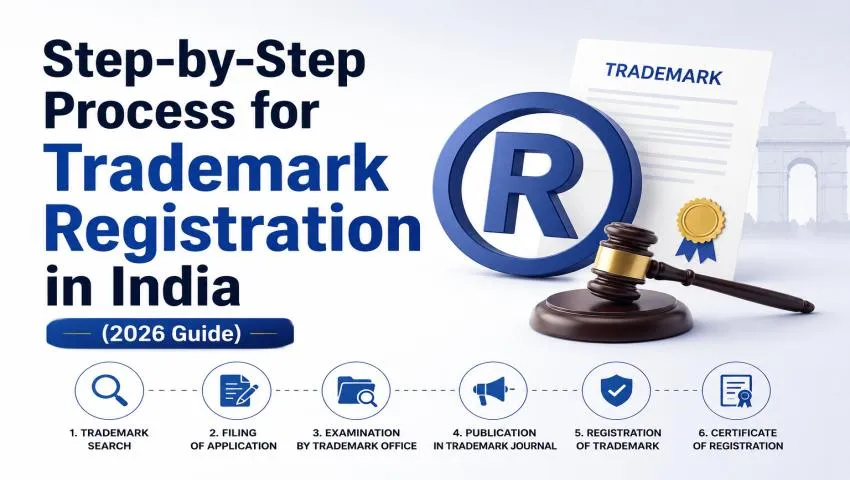
The trademark registration process involves several stages, including filing, formality checks, substantive examination, examination objections, hearings, Journal publication and possible opposition. IP India's official workflow confirms that an application can move through an Examination Report → Reply → Show Cause Hearing → Acceptance or Refusal before publication in the Trade Marks Journal.
This makes the examination stage particularly important for businesses.
Under Rule 33 of the Trade Marks Rules, 2017, the Registrar examines the application and searches earlier trademarks to identify marks that may be identical or deceptively similar for the same or similar goods or services. If the Registrar has an objection to acceptance, an examination report is communicated to the applicant.
The latest IP India developments also show an increased focus on procedural clarity. The Revised Draft Manual of the Trade Marks Office (Practice & Procedure) was published for stakeholder comments in August 2026. Because it is a draft, businesses should use it as a procedural development to monitor rather than assume that every proposed provision has already become binding.
Another current development is IP India's Special Disposal Drive for pending opposition matters. While this is different from an examination objection, it shows that trademark owners should actively monitor pending matters instead of treating the filing of an application as the final step.
Why Does a Trademark Application Receive an Objection?
A trademark objection generally means that the Trade Marks Registry has identified an issue that needs to be addressed before the application can proceed.
The grounds can vary depending on the application. Common issues may involve distinctiveness, similarity with an earlier mark, descriptive terms, prohibited marks, classification or deficiencies in the application.
Two provisions that are particularly important are Sections 9 and 11 of the Trade Marks Act, 1999.
Section 9 deals broadly with absolute grounds for refusal, including marks that lack distinctive character or are descriptive or customary in certain circumstances. Section 11 deals with relative grounds, including conflicts with earlier trademarks.
However, receiving an examination report does not automatically mean that the trademark will be rejected.
The applicant gets an opportunity to respond to the objections and, where required, present arguments or evidence.
A business should therefore avoid these mistakes:
- Ignoring the examination report.
- Sending a generic reply without addressing each objection.
- Failing to check cited earlier trademarks.
- Providing weak evidence of prior use when use is claimed.
- Confusing an examination objection with a third-party opposition.
- Missing the applicable response timeline.
- Assuming that a trademark application automatically becomes registered after filing.
The response should be based on the actual grounds mentioned in the examination report, not on a generic trademark objection format copied from another application.
If your objection is already pending, you can explore CertifyKaro's Trademark Objection service.
What Is the Difference Between Trademark Objection and Opposition?
This is one of the most important questions for applicants.
A trademark objection generally comes from the Trade Marks Registry during examination of the application.
A trademark opposition, on the other hand, is generally filed by a third party after the trademark application has been advertised in the Trade Marks Journal.
The two stages have different procedures and deadlines.
IP India's official rules state that a notice of opposition is filed in Form TM-O within four months from publication or re-publication of the trademark application in the Journal.
The applicant then has two months from receipt of the opposition notice to file a counterstatement under Rule 44.
In simple terms:
- Trademark Objection: Raised during examination by the Registry.
- Trademark Opposition: Filed by another person/entity after Journal publication.
- Objection Reply: Responds to the grounds mentioned by the Registrar.
- Opposition Counterstatement: Responds to the grounds raised by the opponent.
- Show Cause Hearing: May occur when the Registry requires further explanation.
- Opposition Hearing: Deals with a contested third-party challenge.
- Registration: Happens only after the application clears the applicable stages.
This distinction is important because the solution depends on where the trademark application currently stands.
IP India also maintains separate hearing systems for Trade Mark show-cause matters and Opposition/Rectification matters.
How to Reply to a Trademark Objection in 2026?
If you receive an examination report, do not start by searching for a ready-made reply. First understand exactly what the Registry has raised.
1. Download the Examination Report
Check the application number and download the examination report from the official IP India system.
Verify:
- Application number
- Trademark name/logo
- Applicant name
- Filing date
- Class
- Objection sections
- Cited trademarks
- Any procedural/formality issue
2. Identify the Grounds of Objection
Read each objection separately.
For example, if the report raises a Section 11 objection because of an earlier mark, the response should address the cited mark and explain why registration should still be considered.
If the issue relates to distinctiveness or descriptiveness under Section 9, the response may need a different legal and factual approach.
3. Check the Cited Trademarks
If earlier marks have been cited, investigate:
- Their current status
- Classes
- Goods/services
- Applicant/proprietor
- Similarity
- Whether they are registered, pending, expired or abandoned
- Actual market use, where relevant
Do not simply argue that your brand “looks different.” The comparison should address the relevant facts and legal grounds.
4. Collect Supporting Evidence
Depending on the objection, useful evidence may include:
- Invoices
- Advertising material
- Website records
- Product packaging
- Social media presence
- Sales records
- Promotional material
- Business registration records
- Date-stamped commercial documents
Evidence is particularly relevant where the applicant relies on prior use or acquired distinctiveness.
5. Prepare a Point-by-Point Reply
The reply should address each ground raised in the examination report.
A strong response is generally structured around:
- Applicant background
- Trademark details
- Objection raised
- Applicant's response
- Supporting facts/evidence
- Legal grounds, where applicable
- Request for acceptance
6. File the Reply Through the Proper Channel
Use the applicable IP India filing mechanism and retain the acknowledgement and submitted documents.
7. Monitor the Application
Do not stop checking the application after filing the reply.
The application can subsequently move toward hearing, acceptance, publication or another procedural stage.
IP India's online systems provide application and hearing-related information, including dynamic hearing cause lists.
What Happens After a Trademark Objection Reply?
The next step depends on how the Registry considers the response.
IP India's official workflow shows that after an examination report and reply, the application may proceed through further review. If the response is not considered satisfactory, a show-cause hearing may be scheduled. If the matter is accepted, it can proceed toward publication in the Trade Marks Journal. If refused, the applicant may have further legal remedies depending on the circumstances.
This means that filing a reply is not necessarily the final step.
A business should monitor:
- Reply status
- Hearing notice
- Hearing date
- Hearing cause list
- Application status
- Journal publication
- Opposition period
- Registration status
IP India's current trademark system shows active Journal publication, with Trademark Journal No. 2278 published on September 14, 2026 and earlier weekly issues also available online.
For businesses, this reinforces the importance of tracking the application after the objection reply.
What Should You Do If Your Trademark Objection Goes to Hearing?
A hearing may be required when the Registry needs further clarification or when the written response does not resolve the objection.
If a hearing notice is received, the applicant should first check the date and hearing mode.
IP India's current system provides dynamic hearing cause lists and allows users to check relevant trademark hearing information.
Before the hearing:
- Review the original examination report.
- Review the reply already filed.
- Identify unresolved objections.
- Recheck cited trademarks.
- Organise supporting evidence.
- Prepare concise arguments for each objection.
- Check the hearing date and time.
- Confirm the hearing mode and applicable instructions.
- Keep application documents accessible.
- Monitor the application after the hearing.
The purpose is not simply to repeat the written reply. The hearing should address the issues that remain unresolved before the Registrar.
Latest IP India Draft Manual: Why Should Businesses Watch It?
The Revised Draft Manual of the Trade Marks Office (Practice & Procedure) is one of the notable current IP India developments.
IP India published the public notice on August 21, 2026, inviting stakeholders to submit comments and suggestions within 15 days.
For trademark applicants, the significance is mainly procedural. A manual can provide practical guidance on how Registry processes are handled.
However, there is an important distinction:
Draft manual ≠ final amendment to the Trade Marks Act or Rules.
Therefore, businesses should not change their legal compliance strategy merely because a proposed procedural approach appears in a draft document.
For current legal deadlines and requirements, applicants should continue to rely on the applicable Trade Marks Act, 1999, Trade Marks Rules, 2017 and official IP India notices.
The current Trade Marks Rules specifically set out the examination and opposition framework, including Rule 33 on examination and Rule 42 onwards on opposition.
Common Mistakes While Handling Trademark Objections
Trademark objections become more difficult when businesses delay action.
Common mistakes include:
- Waiting until the last moment to review the examination report.
- Filing a generic response.
- Not addressing every objection.
- Ignoring cited prior trademarks.
- Using incorrect evidence.
- Claiming prior use without adequate supporting records.
- Confusing Section 9 and Section 11 objections.
- Missing a hearing notice.
- Not checking the application after filing the reply.
- Assuming that an objection means automatic rejection.
- Assuming that filing a reply guarantees registration.
The best approach is to treat the examination report as a specific legal and factual problem that needs a specific response.
FAQs About Trademark Objection 2026
1. What is a trademark objection in India?
A trademark objection is an objection raised by the Trade Marks Registry during examination of an application. The Registrar may object to acceptance on grounds provided under the Trade Marks Act, including issues relating to distinctiveness or conflict with earlier marks. Rule 33 provides for communication of the examination report to the applicant.
2. How long do I have to reply to a trademark objection?
The applicable response period should be checked against the current Trade Marks Rules and the examination communication received for the particular application. Applicants should not rely on generic online claims about deadlines without checking the current official record.
3. Can a trademark objection be removed?
An objection may be addressed through a written response and, where required, a hearing and supporting evidence. The outcome depends on the grounds of objection and the Registrar's consideration of the response.
4. What happens if a trademark objection is not replied to?
Failure to respond can prevent the application from progressing and may result in abandonment or other adverse procedural consequences, depending on the stage and applicable rules. Applicants should therefore review the official examination communication immediately after receiving it.
5. Is trademark objection the same as trademark opposition?
No. An objection is generally raised by the Registry during examination, while an opposition is generally filed by a third party after Journal publication. Under Rule 42, an opposition is filed in Form TM-O within four months from publication or re-publication of the application.
SEO Keywords
Primary Keywords:
- Trademark Objection 2026
- Trademark Objection
- Trademark Objection Reply
- Trademark Objection in India
Secondary Keywords:
- Trademark Examination Report
- Trademark Objection Reply Online
- Trademark Objection Removal
- Trademark Objection Status
- Reply to Trademark Objection
- Trademark Hearing
- Trademark Examination Report Reply
- IP India Trademark Objection
- Trademark Registration Objection
- Trademark Objection Process
- Trademark Opposition
- Trademark Rules 2026
Final Takeaway
The latest Trademark Objection 2026 landscape shows why businesses should actively monitor their trademark applications instead of treating filing as the end of the process.
IP India's August 2026 public notice on the Revised Draft Manual of the Trade Marks Office (Practice & Procedure) indicates continued work on procedural guidance, while the August 31 Special Disposal Drive focuses on pending opposition matters involving settlement or withdrawal.
For an applicant facing an authority objection, the practical approach remains straightforward: understand the exact objection, check the cited marks, prepare evidence, submit a point-by-point response, attend a hearing if required and continue monitoring the application afterward.
The current Trade Marks Rules remain the key source for procedural requirements, while IP India notices should be checked for current administrative developments.
Need Help With a Trademark Objection?
CertifyKaro se contact karo for assistance with Trademark Objection Reply, Examination Reports, Trademark Registration and related trademark compliance.
Call/WhatsApp: +91 70422 52542
Official reference: IP India – Trade Marks