Learn the latest BIS Certificate 2026 updates, upcoming QCOs, mandatory products, registration process, eligibility and compliance requirements with CertifyKaro.
Introduction
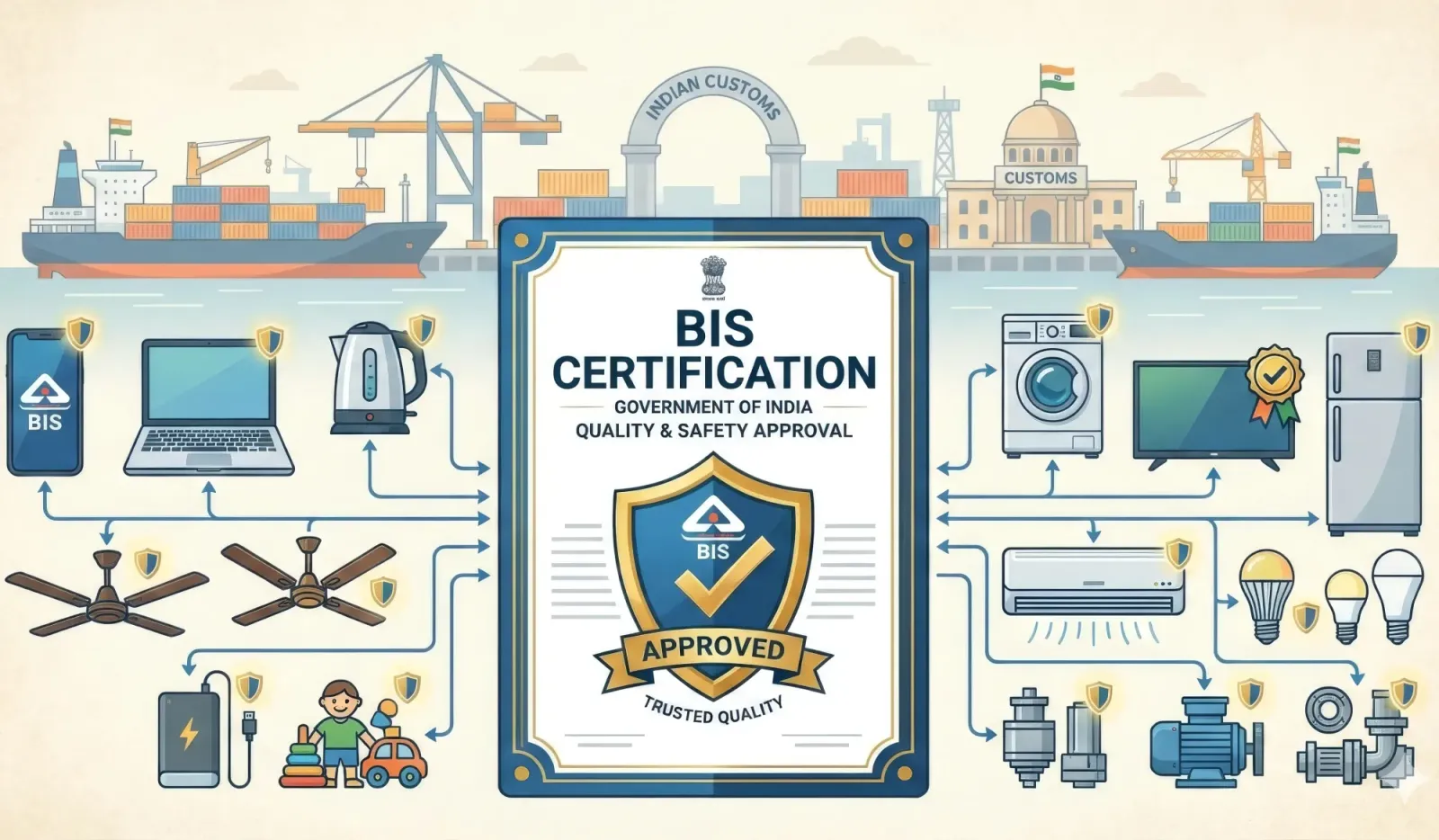
BIS Certificate requirements are becoming increasingly important for manufacturers, importers and businesses selling regulated products in India. In 2026, the Bureau of Indian Standards (BIS) continues to expand and update the list of products covered by mandatory Quality Control Orders (QCOs). The latest BIS information shows several QCOs scheduled to come into force between September and October 2026, covering products such as linear alkyl benzene, pipe wrenches, spanners, pliers and aluminium utensils. BIS has also continued introducing new standards and granting licences under different certification schemes. For businesses, this means checking the applicable Indian Standard and QCO before manufacturing, importing or selling a regulated product is more important than ever.This guide explains the latest BIS Certificate 2026 developments, who needs certification, the registration process, documents, schemes and practical compliance steps in simple English.
Latest BIS Certificate Updates in 2026
The biggest development for businesses in 2026 is the continued expansion of mandatory product certification through Quality Control Orders.BIS itself explains that certification is generally voluntary. However, the Central Government can make compliance compulsory for specific products through QCOs because of considerations such as consumer safety, environmental protection, public health, prevention of unfair trade practices and national security.
Upcoming QCOs in 2026
BIS's latest list of notified QCOs due for implementation includes several products with enforcement dates in the coming months.Examples include:
- Linear Alkyl Benzene – 30 September 2026
- Pipe Wrenches – 1 October 2026
- Heavy Duty Pipe Wrenches – 1 October 2026
- Open-Jaw Wrenches/Spanners – 1 October 2026
- Ring Wrenches/Spanners – 1 October 2026
- Single-ended Open-jaw Adjustable Wrenches – 1 October 2026
- Chain Pipe Wrenches – 1 October 2026
- Combination Side Cutting Pliers – 1 October 2026
- Wrought Aluminium Utensils – 1 October 2026
This is particularly relevant for manufacturers and importers because a product may move from a voluntary standards environment to mandatory compliance once the relevant QCO becomes effective.Another important 2026 development is that BIS has continued publishing new standards and granting licences. For example, BIS announced an All India First Licence for carbon and low-alloy steel wire rods under IS 19497:2026 on 20 August 2026.
Why Businesses Should Track QCO Updates
A business should not assume that an existing product approval automatically covers every future standard or product variation.Before launching a product, businesses should verify:
- Applicable Indian Standard
- Relevant QCO
- Implementation date
- Product specifications
- Testing requirements
- Applicable BIS certification scheme
- Manufacturer eligibility
- Marking requirements
- Applicable exemptions
BIS also maintains product-specific information and technical guidelines for areas such as electrical equipment and machinery under Scheme X.
Who Needs a BIS Certificate in India?
One of the most searched questions is:“Is BIS Certification mandatory for all products in India?”No. BIS Certification is not automatically mandatory for every product.The requirement depends primarily on whether the product is covered by a mandatory QCO or another applicable government notification.
Businesses That May Need BIS Certification
BIS requirements can apply to:
- Indian manufacturers
- Foreign manufacturers
- Importers
- Electrical product manufacturers
- Electronics companies
- Steel manufacturers
- Chemical manufacturers
- Construction-material manufacturers
- Machinery manufacturers
- Consumer-product companies
- Toy manufacturers
- Kitchenware manufacturers
- Automotive-related product manufacturers
- Producers of other QCO-covered products
The applicable certification route depends on the product.
Major BIS Certification Schemes
1. Scheme-I / ISI Mark Scheme
This is one of the most commonly recognised BIS certification routes. It applies to various products where manufacturers must demonstrate conformity with the relevant Indian Standard.
2. Scheme-II / Registration Scheme
This includes product categories where registration is required under the applicable BIS framework.
3. Foreign Manufacturers Certification Scheme
Foreign manufacturers producing products covered by applicable mandatory requirements may need certification under the FMCS framework.
4. Scheme-IV / Certificate of Conformity
For certain products, a Certificate of Conformity route may apply.
5. Scheme-X Certification
Scheme X covers specified products and product categories, including certain machinery and electrical equipment. Therefore, businesses should identify the correct scheme first, rather than simply searching for “BIS registration online” and submitting an application without checking the applicable product standard.
How to Apply for BIS Certification Online?
The BIS application process starts with identifying the correct Indian Standard for the product. BIS's official application guidance specifically states that manufacturers should first identify the applicable Indian Standard and then assess their manufacturing infrastructure, process controls, quality control and testing capabilities.
Step 1: Identify the Applicable Indian Standard
Search the BIS standards database and identify the standard applicable to your product.This is the most important first step because the testing and documentation requirements depend on the relevant standard.
Step 2: Check the QCO
Find out whether the product is covered under a mandatory QCO.Also check the implementation date, especially when a new QCO has recently been notified.
Step 3: Review Product Requirements
Analyse the product specifications and compare them with the applicable Indian Standard.
Step 4: Prepare Manufacturing Infrastructure
BIS expects manufacturers to have suitable manufacturing infrastructure, process controls, quality control systems and testing capabilities appropriate for the product.
Step 5: Product Testing
Depending on the applicable certification scheme, testing may be required through a BIS-recognised laboratory, the manufacturer's own facilities or a combination of methods.
Step 6: Submit Online Application
BIS states that applications for product certification under the relevant scheme are accepted online, including payments, through the designated BIS application system.
Step 7: Factory Assessment
For applicable certification schemes, BIS may assess the manufacturing premises, production facilities, quality-control arrangements and testing capabilities.
Step 8: Technical Evaluation
The submitted information, test results and manufacturing arrangements are evaluated against the applicable Indian Standard.
Step 9: BIS Licence / Registration
Once the applicable requirements are successfully completed, BIS grants the relevant licence, registration or conformity approval.
Practical BIS Compliance Checklist for 2026
Before applying for a BIS Certificate, businesses should check:✔ Identify the correct Indian Standard✔ Check whether a QCO applies✔ Verify QCO implementation date✔ Select the correct BIS certification scheme✔ Prepare product specifications✔ Review manufacturing infrastructure✔ Establish quality-control procedures✔ Arrange applicable product testing✔ Prepare company and factory documents✔ Keep technical information ready✔ Check marking requirements✔ Monitor future QCO amendments✔ Maintain records after certification✔ Track licence validity and applicable surveillance requirementsThe last point is particularly important because BIS certification is not simply a one-time paperwork exercise. Businesses need to continue meeting the relevant quality and compliance requirements after obtaining approval.
Why 2026 BIS QCO Changes Matter for Importers and Manufacturers
The upcoming QCO implementation dates make compliance planning particularly important for businesses that manufacture or import regulated products.For example, businesses dealing with products scheduled for QCO implementation in September or October 2026 should not wait until the enforcement date to determine whether certification is required. BIS publishes these upcoming QCOs specifically to provide advance information to stakeholders. A manufacturer should therefore review its product catalogue and ask:
- Is my product covered by a QCO?
- What Indian Standard applies?
- When does the QCO become effective?
- Does my business qualify for any specific exemption?
- Which BIS scheme applies?
- Is product testing required?
- Does my factory meet the prescribed requirements?
- Do imported products require separate certification arrangements?
For certain products, QCOs may also contain specific provisions for MSMEs, legacy stock, exports or research and development imports. These provisions vary from order to order, so businesses should check the specific QCO applicable to their product rather than relying on general BIS information.For instance, the 2026 Cookware, Utensils and Cans for Foods and Beverages QCO contains specific provisions concerning implementation timelines and certain categories of stock and R&D imports.
Internal Links
- BIS Certification Services – CertifyKaro
- GST Registration – CertifyKaro
- ISO Certification – CertifyKaro
Authority Websites
FAQs
What is a BIS Certificate?
A BIS Certificate is an approval issued under the applicable BIS conformity-assessment framework confirming that a product meets the relevant Indian Standard and certification requirements.
Is BIS Certification mandatory in India?
Not for every product. BIS certification becomes mandatory where the Central Government has made compliance compulsory through a QCO or another applicable notification.
What are the latest BIS updates in 2026?
BIS continues to expand and update mandatory certification requirements. Current upcoming QCOs include products scheduled for implementation in September and October 2026, including linear alkyl benzene, various wrenches and spanners, pliers and wrought aluminium utensils.
How long does BIS Certification take?
There is no single fixed timeline for every product. The time depends on the applicable standard, testing, documentation, factory assessment and BIS evaluation.
Can foreign manufacturers obtain BIS Certification?
Yes. Eligible foreign manufacturers can apply under the applicable BIS certification framework, including the Foreign Manufacturers Certification Scheme where applicable.
SEO Keywords
BIS Certificate, BIS Certification, BIS Registration, BIS Certificate India, BIS Licence, BIS Certification 2026, BIS QCO 2026, Quality Control Order 2026, BIS Registration Online, BIS Certification Online, ISI Mark Certification, BIS CRS Registration, BIS FMCS, Mandatory BIS Certification, BIS Compliance India
CTA - Get Your BIS Certificate with CertifyKaro
Planning to manufacture or import a product covered by a BIS requirement?CertifyKaro can help with product classification, applicable BIS scheme identification, documentation, testing coordination and certification assistance.📲 Call / WhatsApp: +91 70422 52542
Our Services
✔ BIS Certificate Registration
✔ ISI Mark Certification
✔ BIS CRS Registration
✔ BIS FMCS Assistance
✔ GST Registration
✔ Company Incorporation
✔ ISO Certification
✔ Trademark Registration
✔ Annual Compliance